


Bottled water
-
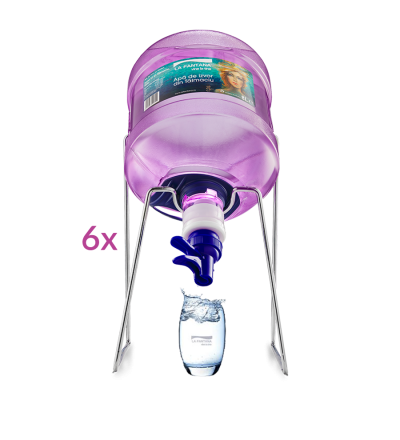
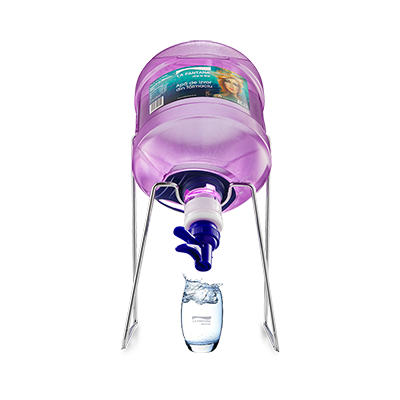
Start Pack (6 x 8) 48 Liters of Still Spring Water in 8-Liter Reusable Bottles
lei 315.51 -
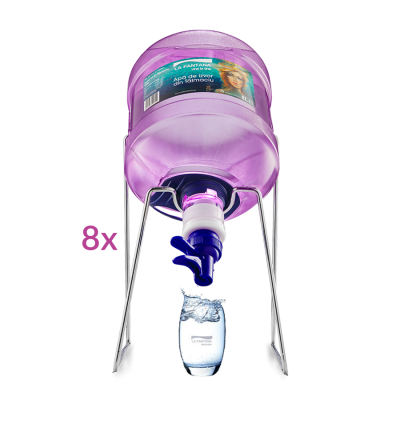
Start Pack (8 x 8L) 64 Liters of Still Spring Water in 8-Liter Reusable Bottles
lei 404.73 -
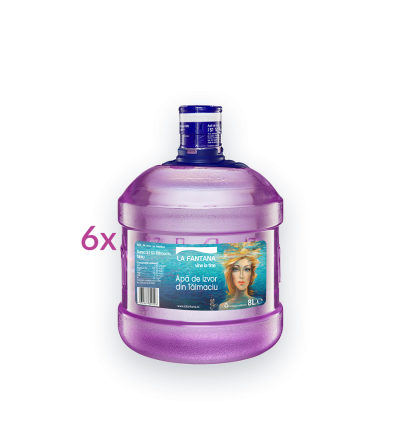
Refill Pack (6 x 8L) 48 liters of spring water with reusable 8L bottles provided in exchange
lei 94.65 -
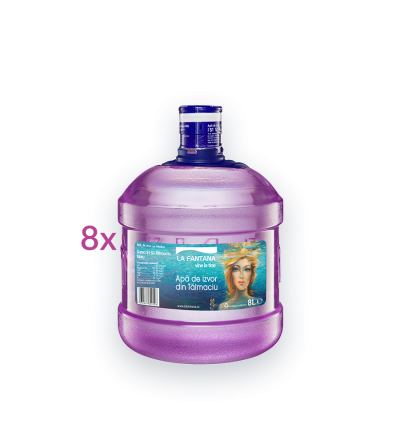
Refill Pack (8 x 8L) 64 liters of spring water with reusable 8L bottles provided in exchange
lei 118.59 -
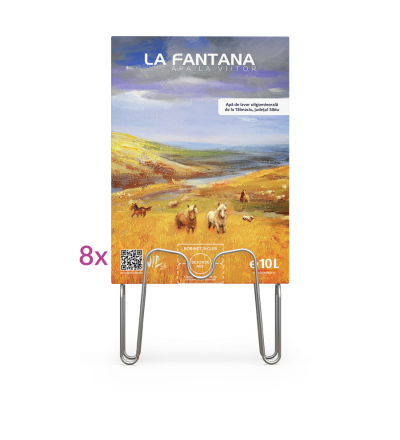
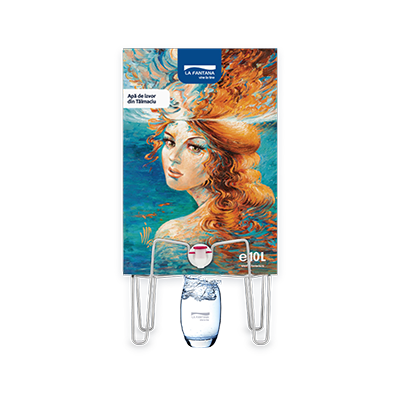
Bag-in-Box Pack (8 × 10L) 80 liters of still spring water + free stand with the first order
lei 218.99 -
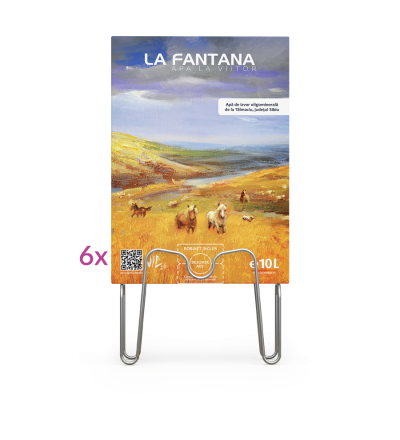
Bag-in-Box Pack (6 × 10L) 60 liters of still spring water + free stand with the first order
lei 176.84 -
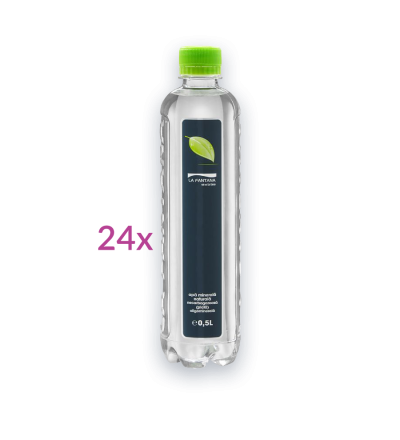
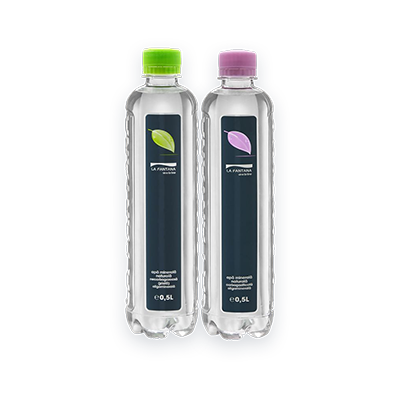
Hydration Pack 24 0.5L still mineral water bottles
lei 65.74 -
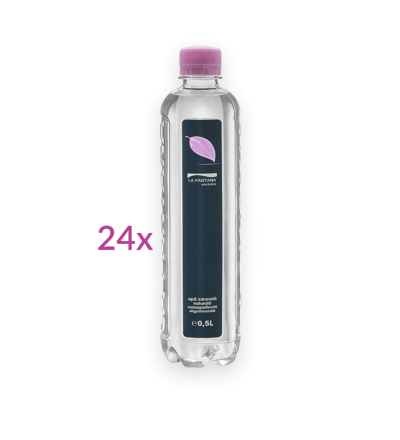
Carbo hydration pack 24 0.5L carbonated mineral water bottles
lei 65.74 -
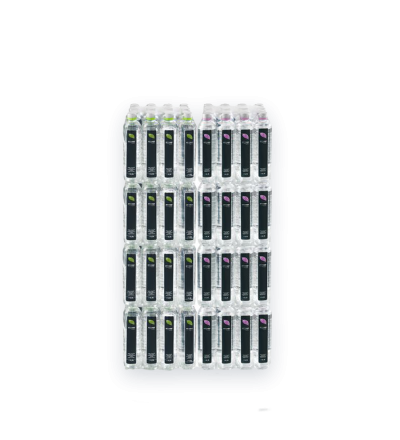
Hydration Mix Pack 96 96 bottles of 0.5 L still or sparkling mineral water – your choice
lei 255.06 -
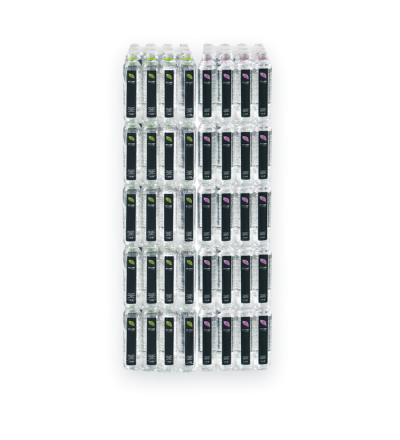
Hydration Mix Pack 120 120 bottles of 0.5 L still or sparkling mineral water – your choice
lei 308.96 -
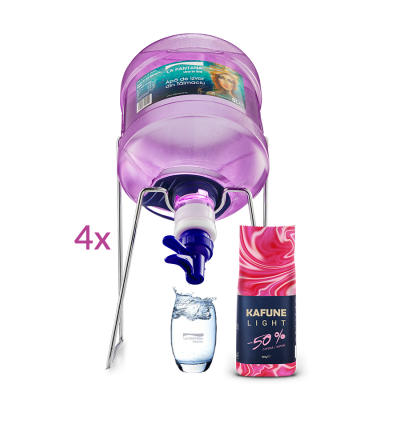
Start Pack (4 x 8L) & Light Whole Bean Coffee 32 liters of spring water + 500g whole bean KAFUNE Light coffee
lei 318.20 -
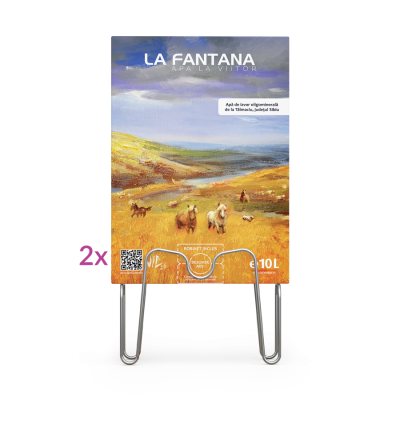
Bag-in-Box Pack (2 × 10L) 20 liters of still spring water + free stand with the first order
lei 65.58 -
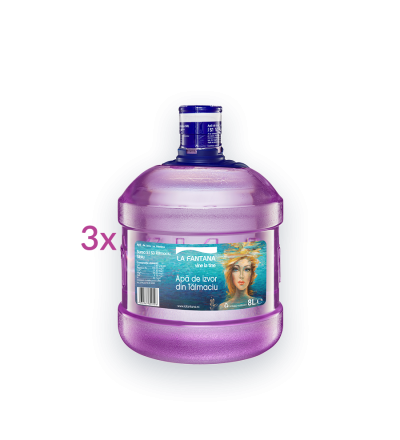
Refill Pack (3 x 8L) 24 liters of spring water with reusable 8L bottles provided in exchange
lei 48.96 -
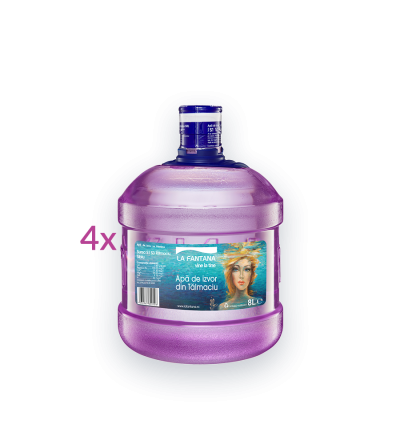
Refill Pack (4 x 8L) 32 liters of spring water with reusable 8L bottles provided in exchange
lei 62.02 -
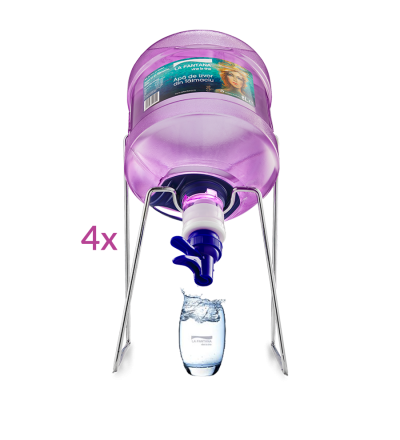
Start Pack (4 x 8) 32 Liters of Still Spring Water in 8-Liter Reusable Bottles
lei 225.21 -
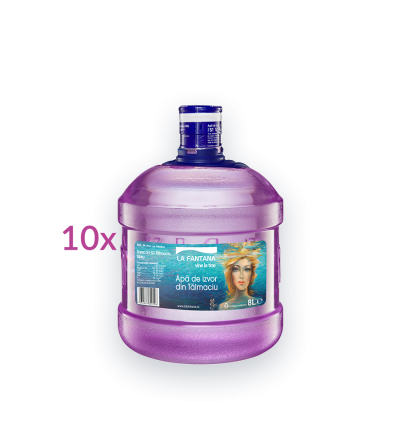
Refill Pack (10 x 8L) 80 liters of spring water with reusable 8L bottles provided in exchange
lei 142.52 -
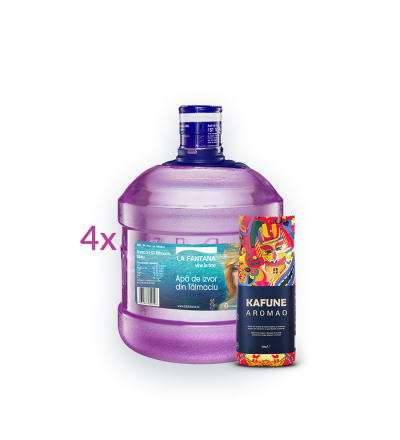
Refill Pack (4 x 8L) & Aromao Whole Bean Coffee 32 liters of spring water + 500g whole bean KAFUNE Aromao coffee
lei 153.53 -
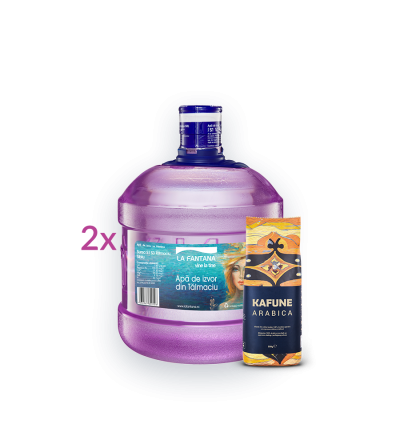
Refill Pack (2 x 8L) & Arabica Whole Bean Coffee 16 liters of spring water + 500g whole bean KAFUNE Arabica coffee
lei 131.28 -
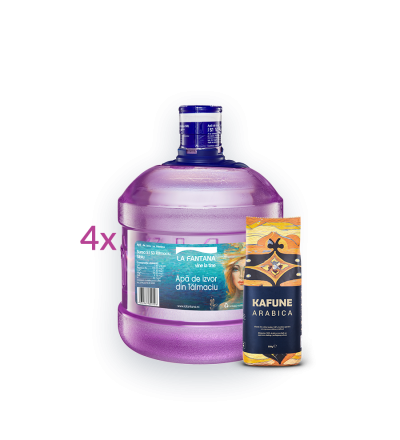
Refill Pack (4 x 8L) & Arabica Whole Bean Coffee 32 liters of spring water + 500g whole bean KAFUNE Arabica coffee
lei 159.63 -
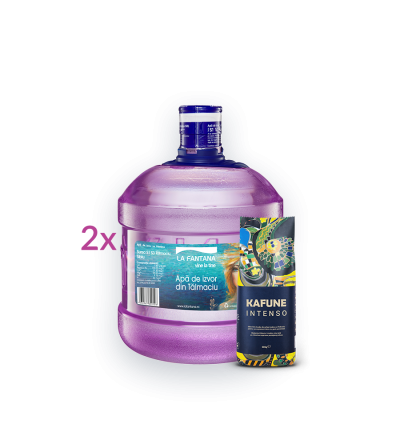
Refill Pack (2 x 8L) & Intenso Whole Bean Coffee 16 liters of spring water + 500g whole bean KAFUNE Intenso coffee
lei 125.18
What Is the Difference Between Still Mineral Water and Still Spring Water?
First, some clarifications. Still water can be mineral water, spring water, or table water. The term “still” strictly refers to the fact that the water is non-carbonated and does not indicate the type of bottled water—mineral, spring, or table. Any potable water can be labeled “still water”, just as any potable water can be carbonated if carbon dioxide is added.
The differences between mineral water and spring water are based on mineral composition characteristics and legal classification. Importantly, the attribute “still” is purely commercial and serves to distinguish non-carbonated water from water enriched with carbon dioxide (naturally at the source or added afterward).
In brief: Mineral water comes from sources licensed for exploitation by the National Agency for Mineral Resources and owned by the state. It must originate from mountain springs strictly protected from contaminants, with a characteristic and consistent mineral composition over time. Spring water has less strict mineral composition requirements and is generally lower in mineral content compared to mineral water. Its composition may vary slightly within certain parameters. Both types of water are extracted from underground springs, must be microbiologically pure, and must be bottled at the source.
What Is the Mineral Composition of Still Spring Water? (8L and 10L)
La Fântâna still spring water, bottled in Tălmaciu, Sibiu County, has a balanced mineral composition with a low sodium content, making it suitable even for individuals with dietary restrictions. You can consult the complete list of physicochemical compounds in La Fântâna still spring water and learn about the health benefits of mineral water for the body here.
What Is the Fluoride Content in Still Spring Water and Mineral Water?
The maximum legally allowed limit in Romanian legislation regarding fluoride in drinking water is 1.5 mg/L, and in mineral water, 5.0 mg/L. In the case of mineral water, at concentrations higher than 1.5 mg/L, the label must specify: "Contains more than 1.5 mg/L: product not recommended for regular consumption by infants and children under 7 years." Natural mineral water Sestina contains fluoride at a concentration of 0.12 mg/L, natural mineral water bottled in Serbia contains fluoride at 0.27 mg/L, and La Fântâna still spring water from Tălmaciu contains 0.19 mg/L.
Fluoride in still or sparkling water, in very small amounts, may have beneficial effects, but it can be extremely toxic in higher concentrations. The USA and other countries introduced small amounts of fluoride into public drinking water networks as early as the mid-20th century, because the presence of fluoride in drinking water supports dental health. According to an article published by Harvard Public Health, more recent research shows that the risks associated with fluoride in water may outweigh the potential benefits, and countries that added fluoride to water have reduced or eliminated its presence in public water supplies. It is important to note that Romania is not on the list of these countries.
You can read the article on this topic published by Harvard Public Health here:
https://www.hsph.harvard.edu/magazine/magazine_article/fluoridated-drinking-water/
You can consult the list of physicochemical compounds in each La Fântâna bottled water here:
https://lafantana.ro/ro/asistenta/avize-certificari-si-buletine-de-analiza.
What Is the pH of La Fântâna Still Water?
pH is the parameter that indicates the concentration of hydrogen ions in water. Neutral pH is 7.00, and legislation requires that the pH of drinking water must be between 6.5 and 9.5 pH units. If the water contains natural or added carbon dioxide, the pH can fall below 6.5, even down to 4.00.
- La Fântâna still water bottled in Bucharest has a pH of 8.2 units
- La Fântâna still spring water bottled in Tălmaciu, Sibiu County (8L and 10L) has a pH of 7.9 units
- La Fântâna natural still mineral water bottled in Mitrovopolje, Serbia (0.5L and 1.5L) has a pH of 7.0 units
- La Fântâna natural sparkling mineral water bottled in Mitrovopolje, Serbia (0.5L) has a pH of 4.8 units.
What Is the Total Dissolved Solids (TDS) of Still Water? And of Mineral Water?
Total dissolved solids (TDS) represent all compounds dissolved in water, which remain in a vessel after one liter of water has completely evaporated. TDS is expressed in mg/L, and its value must appear on labels.
In terms of TDS value, according to Romanian legislation and European directives, four types of mineral water are distinguished:
- Very low mineralization, when TDS is below 50 mg/L
- Low mineralization, oligomineral, when TDS is between 50 and 500 mg/L
- Medium mineralization, when TDS is between 500 and 1500 mg/L
- High mineralization, when TDS is over 1500 mg/L
You can consult the TDS content of La Fântâna bottled waters here.
What Is the Difference Between Mineral Water and Sparkling/Carbonated Water?
Mineral water refers to a distinct category of water, extracted and bottled at the source, subject to strict quality, composition, and control standards. Mineral water can be non-carbonated (still water) or have varying degrees of added carbon dioxide, either naturally occurring (as it comes from the mineral spring) or added during extraction and bottling.
Depending on the carbon dioxide present in the water, mineral waters fall into the following categories:
- Non-carbonated (still), extracted without carbon dioxide from the source
- Naturally sparkling, containing natural carbon dioxide from the source
- Carbonated, to which carbon dioxide is added.
Any type of potable water - table, spring, or mineral - can be carbonated.